The first six overs of a T20 — the powerplay — decide 35-50% of the eventual match total and 60-70% of the top-order fantasy points. Most fantasy players treat the powerplay as a coin flip: pick an opener, hope for a fifty, lock the team. We break down a 6-over projection framework for fantasy cricket in 2026: opener scoring rate, dot-ball math, boundary bonus stacking across Dream11, MyTeam11, Gamezy and CricNinja, top-order selection by venue and matchup, and a 3-step pre-match powerplay workflow that converts the powerplay from a coin flip into a structured edge for IPL 2026 mega contests and head-to-head contests.

· CricNinja News Desk
The first six overs of a T20 innings — the powerplay — are the highest-leverage phase in fantasy cricket, and they are consistently underweighted in most fantasy players' team-building process. In a typical 200-run IPL innings, the powerplay contributes 55-75 runs (28-38% of the total). In a 170-run innings on a slower wicket, the powerplay contributes 35-50 runs (20-30% of the total). The 30-50 run spread between powerplay scores — 35 vs 75 — is the single biggest swing factor in fantasy point totals across the match, and that swing lands entirely on the top-order batters you selected.
Every fantasy cricket team has 11 players. The opening batters — typically 2 in the XI but up to 4 in impact-player configurations — are the ones who face the powerplay. Their fantasy points are scored on 1 per run + 4 per four + 6 per six + strike-rate bonus (where applicable) + dot-ball penalty (on some apps). If your opening pair scores 60 in the powerplay (vs the average 45), you gain 15-30 fantasy points. If they score only 25 (vs the average 45), you lose 20-35 fantasy points. The captain tag then multiplies this swing by 2x, so the powerplay phase has a 30-70 point effect on the captain slot alone.
The trap is treating the powerplay as a binary: pick an opener, hope they get bat, lock the team. But the powerplay is a 36-ball projection problem. You can model it: expected balls faced (30-36), expected scoring rate (7-9 runs/over), expected boundary percentage (45-65%), expected dot percentage (30-50%), expected dismissal rate (1.5-3.5 wickets per powerplay across the IPL). Run the projection before the toss and you can convert the powerplay from a coin flip into a structured edge. The four-step powerplay projection framework below does exactly that.
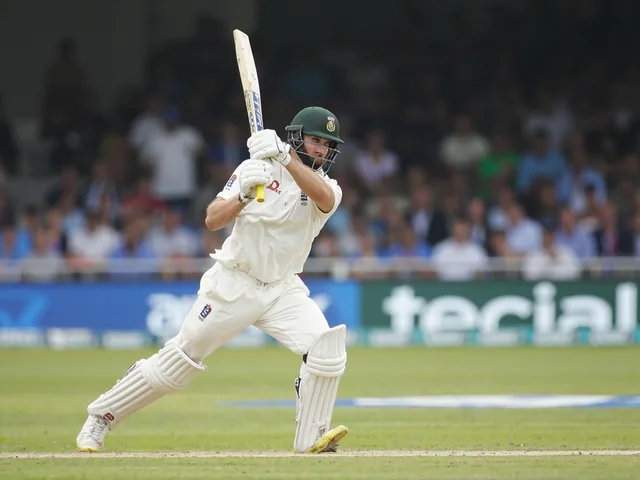
All four major Indian fantasy apps — Dream11, MyTeam11, Gamezy, and CricNinja — use a 1-per-run base for batting, with strike-rate bonuses kicking in at different thresholds. The headline numbers are similar, but the boundary bonuses and strike-rate thresholds differ in ways that compound when you multiply by 36 balls of powerplay scoring.
| Operator | Run base | Boundary bonus | Six bonus | Strike rate bonus (170+) | Dot-ball penalty | Wicket (batting) |
|---|---|---|---|---|---|---|
| Dream11 | 1 per run | 4 per four | 6 per six | 0 (no SR bonus) | None | -2 |
| MyTeam11 | 1 per run | 4 per four | 6 per six | 4 (170+ SR) | None | -2 |
| Gamezy | 1 per run | 4 per four | 6 per six | 2 (150+ SR) | -1 per dot | -2 |
| CricNinja | 1 per run | 5 per four | 8 per six | 6 (170+ SR) | None | -1 |
The powerplay scoring rate scenario: an opener facing 30 balls at a strike rate of 145, hitting 4 fours and 1 six with no dismissal. On Dream11, this scores (30 runs × 1) + (4 × 4) + (1 × 6) = 52 fantasy points. On MyTeam11, the same scenario scores 52 + 4 (SR bonus at 170+ not met, so no bonus) = 52 fantasy points. On Gamezy, the same scenario scores 52 + 0 (150+ SR not met) = 52 fantasy points, minus 1 per dot ball — roughly 12 dots in 30 balls = 40 fantasy points. On CricNinja, the same scenario scores (30 × 1) + (4 × 5) + (1 × 8) + 6 (170+ SR bonus met) = 64 fantasy points. The 12-point swing between Gamezy (40) and CricNinja (64) on the same opener performance is the cleanest illustration of why the app choice matters as much as the opener choice for the powerplay phase.
Multiply the powerplay swing across 36 balls × 2 openers × the captain tag (2x on your captain opener) and the cumulative effect on your mega contest rank is massive. An opener captain who scores 60 in the powerplay at 165 SR on CricNinja = (60 × 1) + (4 fours × 5) + (2 sixes × 8) = 96 captain points. The same opener on Dream11 = (60 × 1) + (4 × 4) + (2 × 6) = 80 captain points. The 16-point captain differential on a single opener performance is the kind of edge that lifts you 3,000-8,000 ranks in a 50,000-entry mega contest.
The top-order selection decision is the most consequential powerplay call. Most fantasy players default-pick Rohit Sharma, Yashasvi Jaiswal, or Shubman Gill because they are household names. But the optimal top-order selection is a venue × matchup × role projection, not a name selection.
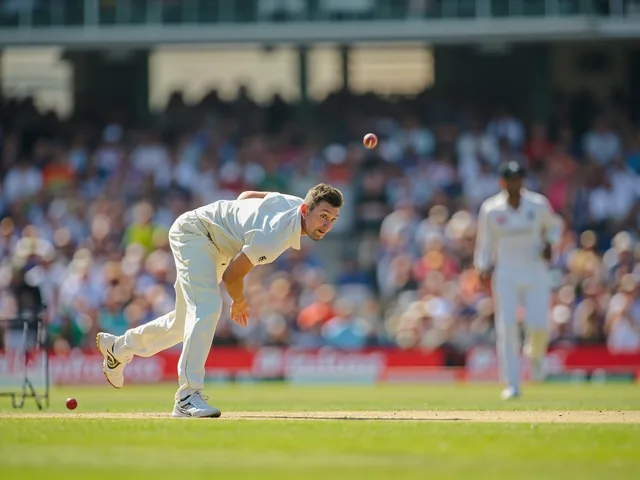
Pick an aggressive opener when the venue is Wankhede, Chinnaswamy, Hyderabad, or Mohali (powerplay scoring rate 8-10 runs per over, dot percentage 25-35%, average powerplay score 60-75). These venues reward openers who swing from ball one and target the short boundaries. Yashasvi Jaiswal, Rohit Sharma, Travis Head, and Abhishek Sharma are the highest-scoring openers on these venues. Pick one of them as your captain in a mega contest on these decks and the ceiling is 80-100 captain points from the powerplay alone.
Pick an anchor opener when the venue is Chepauk, Eden Gardens (afternoon), Lucknow, or Ahmedabad (powerplay scoring rate 6-7.5 runs per over, dot percentage 35-50%, average powerplay score 40-55). These venues reward openers who rotate strike early and accelerate in overs 4-6. KL Rahul, Shubman Gill, Ruturaj Gaikwad, and Sai Sudharsan are the highest-scoring openers on these venues. Pick one of them as your captain and the floor is 50-65 captain points; the ceiling is lower (70-80) but the consistency is much higher, which matters in head-to-head contests.
Matchup signal matters as much as venue. If the opposition has a left-arm seamer (e.g. Trent Boult, T. Natarajan, Mukesh Choudhary) opening the bowling, an opener who plays left-arm spin comfortably (e.g. Rohit Sharma, Ishan Kishan) gets a 10-15% boost in expected scoring rate. If the opposition has two right-arm seamers (e.g. Mohammed Shami, Jasprit Bumrah, Deepak Chahar), a left-handed opener (e.g. Yashasvi Jaiswal, KL Rahul against right-arm) gets the boost instead. Run the matchup check before locking your top order — count the left-arm vs right-arm in the opposition's likely powerplay attack and pick your opener accordingly.
The 18% ownership cap rule applies to powerplay captaincy just as much as it does to overall captaincy. If you captain an opener who is owned by 40-55% of teams (Rohit Sharma, Virat Kohli in batting form), you are matching the field on the captain slot. The captain tag only generates rank-swings when the player you cap is owned by fewer than 18% of teams. The sweet spot for differential powerplay captaincy is 5-12% ownership — second-tier openers who are in form but not consensus picks.
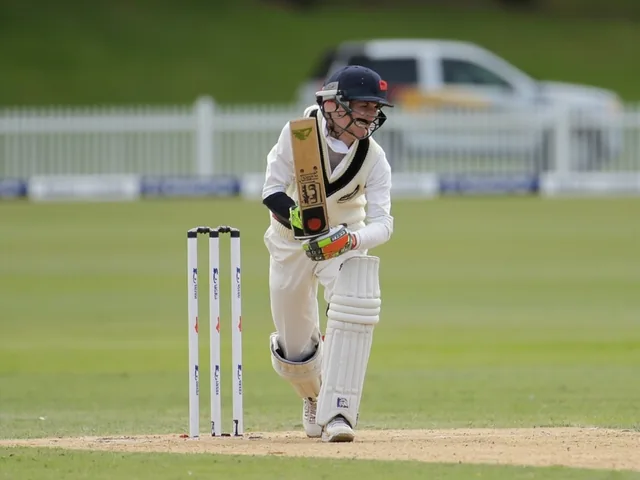
For IPL 2026, the highest-ownership openers are Yashasvi Jaiswal (40-55%), Rohit Sharma (35-50%), Sai Sudharsan (25-40%), and Shubman Gill (25-40%). These are consensus picks and should be used for head-to-head contests where consistency matters more than differential. The differential powerplay captain picks are second-tier openers with 5-12% ownership: Abhishek Sharma (vs spin), Ishan Kishan (vs pace), Prithvi Shaw (in form), Atharva Taide, Yash Dhull. Captain any of these in a mega contest and you have a 5-12% ownership differential that pays off when they outperform the field average in the powerplay.
The math: in a 50,000-entry mega contest, the average opener-captain is owned by 22% of teams (11,000 teams). If your differential opener-captain (8% ownership, 4,000 teams) scores 25 runs more in the powerplay than the field-average captain, you gain 25 × 2 (captain tag) = 50 captain points over the field. That 50-point swing translates to a 3,000-5,000 rank jump in a 50,000-entry contest. In a 500,000-entry mega contest, the same differential translates to a 30,000-50,000 rank jump. The powerplay captain differential compounds across the full IPL season — pick the right differential opener-captain 10 times and you compound 300,000+ rank movement in a season.
The contest type dictates the powerplay captain strategy. Head-to-head contests (1v1, 2v2, 3v3) reward consistency more than variance — pick a top-order opener-captain with 30-50% ownership who will reliably score 50-70 powerplay captain points. Small leagues (100-1,000 entries) reward a balanced approach — mid-range ownership opener-captain with 50-80 captain point floor and 80-100 ceiling. Mega contests (10,000+ entries) reward differential picks and high-variance upside — a second-tier opener-captain with 5-12% ownership that can move you 5,000+ ranks on a single powerplay cameo.
For head-to-head contests, the default opener-captain pick is a top-order bat with 30-50% ownership — Yashasvi Jaiswal, Rohit Sharma, Shubman Gill, KL Rahul. The math: 30-45 powerplay runs × boundary bonus (10-25) + SR bonus (0-6) = 50-70 powerplay captain points, reliable floor for head-to-head. A differential opener-captain who takes time to get going (15-25 powerplay runs) scores 30-50 captain points and is risky in a 1v1 — you lose 20-40 captain points to the consensus pick. In a 1v1, the consistency of the consensus opener-captain is the safer pick.
For mega contests, the default opener-captain pick is a differential top-order bat with 5-12% ownership — Abhishek Sharma, Ishan Kishan, Prithvi Shaw, Atharva Taide, Yash Dhull. The math: a differential opener who outperforms the field average by 25 powerplay runs × 2x captain tag = 50 differential captain points. If your differential opener outperforms the consensus opener by even 30 points, you jump 5,000-15,000 ranks. If they underperform, you fall 3,000-8,000 ranks. The expected value is positive because the upside is much higher than the downside, especially in contests where 60%+ of teams captain a top-order bat.
Use this four-step workflow before locking your fantasy team for an IPL 2026 match on CricNinja, Dream11, MyTeam11, or Gamezy. Each step is a 30-second decision that compounds into a better powerplay captain pick.
Step 1 — Venue check. Open the match page, identify the venue, and look up the average powerplay score and dot-ball percentage. Wankhede, Chinnaswamy, Hyderabad = high-scoring powerplay (8-10 runs/over, 25-35% dots), lean aggressive opener-captain with high boundary ceiling. Chepauk, Eden Gardens = lower-scoring powerplay (6-7.5 runs/over, 35-50% dots), lean anchor opener-captain with high strike-rate bonus. Mohali, Jaipur, Lucknow = balanced powerplay (7-8.5 runs/over, 30-40% dots), lean differential opener-captain if ownership is below 18%.
Step 2 — Matchup check. Look at the two team sheets. Which team has the most in-form opener? Which opener has the better matchup against the opposition's likely powerplay attack — left-arm seamer (Boult, Natarajan, Choudhary) or right-arm pacer (Bumrah, Shami, Chahar)? Pick the opener whose matchup aligns with the opposition's likely bowling attack. For example, if the opposition opens with two right-arm seamers, a left-handed opener (Jaiswal, Rahul, Dhull) is the high-floor captain pick.
Step 3 — Ownership check. On the team-selection screen, look at the projected ownership percentage for your opener-captain. If over 25%, you are consensus — switch to head-to-head contest or pick a different captain. If 5-12%, you are differential — go to mega contest. If 12-18%, you are mid-range — go to small leagues (100-1,000 entries). The ownership projection is updated in real-time on most apps in the last 30 minutes before lock-in, so check the latest number, not the morning projection.
Step 4 — Contest type check. Are you playing a head-to-head, small league, or mega contest? H2H = consensus opener-captain with 30-50% ownership (Jaiswal, Rohit, Gill, Rahul). Small league (100-1,000 entries) = mid-range opener-captain with 12-25% ownership (Sai Sudharsan, Ruturaj, Abhishek Sharma). Mega contest (10,000+ entries) = differential opener-captain with 5-12% ownership (Ishan Kishan, Prithvi Shaw, Yash Dhull, Atharva Taide). Match the contest type to the opener-captain strategy, not the other way around.
For deeper powerplay projection math, opener scoring rate by venue, and contest-type selection strategy across all major Indian fantasy apps, our fantasy tips hub covers bankroll management, captain pick strategy, team balance math, contest selection, small-vs-grand league approach, and differential picks across IPL 2026 and T20 World Cup fixtures. The hub is updated weekly with new venue-specific powerplay projections, opener ownership data, and dot-ball percentage tracking for the 14-week IPL 2026 season. Pair the powerplay strategy with our captain pick math and bankroll management guides to build a complete IPL 2026 fantasy edge.
Common questions about 6-over powerplay projection, opener scoring rate, boundary bonus, top-order selection, and differential captaincy for IPL 2026.
