The captain tag is the single highest-leverage decision in fantasy cricket — a 2x or 1.5x multiplier applied to the same base points decides whether you win a mega contest or finish mid-pack in a 50,000-entry field. We break down the 2x vs 2.5x vs 4x captain math, ownership cap rule, contest-type selection (H2H vs small vs mega), venue and matchup signals, captain swap timing, and the 5-step pre-match workflow across Dream11, MyTeam11, Gamezy, and CricNinja for IPL 2026. Use this framework to convert the captain arm from a coin flip into a structured edge.

· CricNinja News Desk
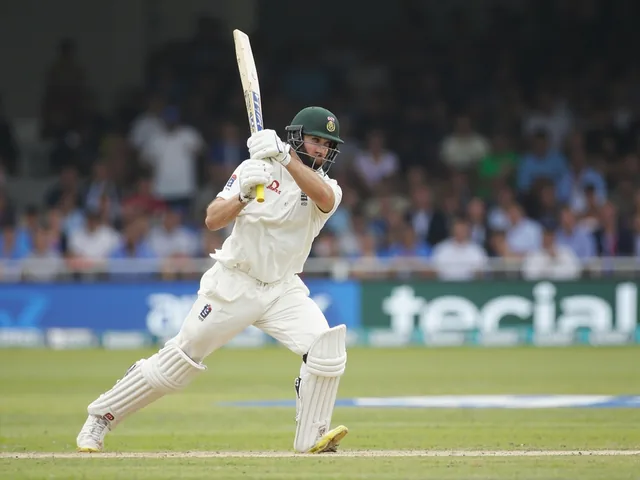
Every fantasy cricket team has 11 players. Exactly one of them wears the (C) captain tag, and exactly one wears the (VC) vice-captain tag. The captain's fantasy points are multiplied by 2x on every major Indian app (Dream11, MyTeam11, Gamezy, CricNinja), and the vice-captain's points by 1.5x. The remaining 9 players score at face value. This single decision — which player gets the (C) tag — swings your team total by 30-150 points in a typical IPL innings, and that 30-150 point swing decides 80% of contest outcomes in a 50,000-entry mega field.
The leverage is asymmetric. If you pick a set top-order bat as captain and they score 40 runs, you get 80 captain points (40 base × 2). If you pick a strike bowler as captain and they take 2/28 with 12 dots and a maiden, you get 90-140 captain points depending on the app. The same differential — 10-60 captain points — applied across a 50,000-entry mega contest translates to a 5,000-25,000 rank swing. In a head-to-head contest, the same swing decides the winner outright. The captain pick is not just one of eleven decisions; it is THE decision.
The trap is treating the captain tag as a popularity contest. Most fantasy players default-captain Rohit Sharma, Virat Kohli, or KL Rahul because they are household names and feel safe. But safe and optimal are not the same thing. A 35% owned captain on a 50,000-entry mega contest gives you zero differential edge — you are matching the field. The captain tag only generates rank-swings when the player you cap is owned by fewer than 18% of teams. This is the ownership cap rule, and it is the single most important concept in captain strategy.
All four major Indian fantasy apps — Dream11, MyTeam11, Gamezy, and CricNinja — use a 2x multiplier for the (C) captain and 1.5x for the (VC) vice-captain. The headline number is identical, but the underlying base-point math differs in ways that compound. Here is how the same 40-run batting cameo scores as captain across the four apps before any contest-specific bonus:
| Operator | Run base | Boundary bonus | Six bonus | Strike rate bonus (170+) | Captain × | Total (40 runs, 4×4, 1×6, SR 165) |
|---|---|---|---|---|---|---|
| Dream11 | 1 per run | 4 per four | 6 per six | 0 (no SR bonus) | 2x | 66 captain points |
| MyTeam11 | 1 per run | 4 per four | 6 per six | 4 (170+ SR) | 2x | 74 captain points |
| Gamezy | 1 per run | 4 per four | 6 per six | 2 (150+ SR) | 2x | 70 captain points |
| CricNinja | 1 per run | 5 per four | 8 per six | 6 (170+ SR) | 2x | 82 captain points |
The 16-point swing between Dream11 and CricNinja on the same 40-run cameo is the cleanest illustration of why the captain decision cannot be evaluated in a vacuum. On Dream11, your captain scores 66 points and you are happy. On CricNinja, the same cameo scores 82 points and you have a 16-point edge over a Dream11 user with the same batting pick. Multiply that edge across 11 players and an entire mega contest, and the operator choice starts to matter as much as the player choice.
The boundary and six bonuses are where CricNinja pulls ahead. A four is worth 4 base + 1 (run) on most apps but 4 base + 1 + 0 on Dream11 (so 5 total) and 4 + 1 + 1 extra boundary bonus on CricNinja (so 6 total). Over 14 IPL matches, a top-order bat who hits 4 boundaries per match accumulates 56 extra captain points on CricNinja vs Dream11. That is the difference between a top-10% finish and a top-25% finish in a typical mega contest. The captain decision is not just about which player to cap; it is about which app's scoring system amplifies your chosen player's strength.
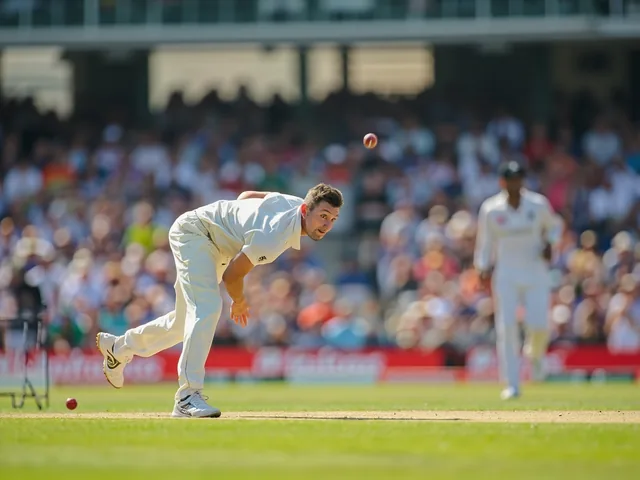
The bat-captain vs bowl-captain decision is the most common dilemma fantasy players face. The default tendency is to captain a top-order bat because the scoring floor is more predictable. But the captain tag is a multiplier — it amplifies whatever the player does, whether the player is a bat or a bowler. If the venue and matchup signal a high-wicket game (bowler-friendly conditions, aggressive batting, two-paced surface), the bowling captain is the higher-leverage pick even though the variance is higher. If the venue signals a flat batting deck with 200+ scores, the top-order bat captain is the right call.
Use these venue and matchup signals as a rule of thumb. Captain a bowler when the venue is Wankhede, Chinnaswamy, or Eden Gardens (death-over swing friendly, dot-ball percentage 40-50% in overs 16-20), when the matchup pits 4-5 left-handers against a wrist-spinner or left-arm orthodox, when the pitch is two-paced with variable bounce, or when the chasing team is a heavy favorite (pressure = wickets). Captain a top-order bat when the venue is a flat deck with 200+ average scores (Mohali, Bengaluru day games, Hyderabad), when the matchup features an out-of-form bowling attack, when the pitch is a road with no lateral movement, or when the batting team is batting first and expected to post 200+.
The matchup signal is the cleanest captain predictor. A top-order bat facing a left-arm seamer who takes 1.4 wickets per match against right-handers is a high-floor captain pick. A strike bowler facing a tail with 4 right-handers and a left-hander is a high-ceiling captain pick. Run the matchup on the team sheet before the toss — count the left-handers in the opposition top 7, count the right-handers, and pick the bowler whose style matches the majority. This is the same logic the IPL teams use to set their batting order; the captain tag should mirror it.
The 18% ownership cap rule is the heuristic that separates differential captaincy from consensus captaincy. If your captain pick is owned by more than 18% of teams in a contest, you are not generating any edge from the captain multiplier — you are just matching the field. The captain tag only gives you a differential advantage when the player you cap is owned by fewer than 18% of teams. The sweet spot for differential captaincy is 5-12% ownership. At that range, when your captain outperforms the field average, you gain 50-200 ranks per wicket or per 20 runs.
For IPL 2026, the highest-ownership batsmen are Rohit Sharma (40-55%), Virat Kohli (35-50%), KL Rahul (25-40%), and Shubman Gill (25-40%). These are the consensus captain picks and should be used for head-to-head contests where consistency matters more than differential. The differential captain picks are second-tier top-order bats, all-rounders, and bowlers with 5-12% ownership: Sai Sudharsan, Yashasvi Jaiswal, Tilak Varma, Rinku Singh, and impact-player specialists. Captain any of these in a mega contest and you have a 5-12% ownership differential that pays off when they outperform the field average.
The math: in a 50,000-entry mega contest, the average captain pick is owned by 22% of teams (11,000 teams have that player as captain). If your differential captain (10% ownership, 5,000 teams) scores 30 runs more than the field-average captain, you gain 30 captain points over the field. That 30-point swing translates to a 1,500-2,500 rank jump in a 50,000-entry contest. In a 500,000-entry mega contest, the same differential translates to a 15,000-25,000 rank jump. That is the value of the 18% ownership cap rule applied to a single differential captain pick.
The contest type dictates the captain strategy. Head-to-head contests (1v1, 2v2, 3v3) reward consistency more than variance — you need a captain that scores 40-60 captain points reliably and does not have the wide variance of a 0-wicket, 50-run death-over spell. Small leagues (100-1,000 entries) reward a balanced approach — mid-range ownership captain with a 60-80 captain point floor and a 100-150 ceiling. Mega contests (10,000+ entries) reward differential picks and high-variance upside — a captain that can move you 5,000+ ranks on a single wicket or a 30-run cameo.
For head-to-head contests, the default captain pick is a top-order bat with 30-50% ownership — Rohit Sharma, Virat Kohli, KL Rahul, Shubman Gill. The math: 35 runs × 2x = 70 captain points is a reliable score for a set top-order bat in a 1v1 contest. A bowling captain who takes 1-2 wickets scores 60-100 captain points but with 30-40% variance (could be 30 if the spell goes badly). In a 1v1, the consistency of the bat captain is the safer pick.
For mega contests, the default captain pick is a differential batsman or bowler with 5-15% ownership — Sai Sudharsan, Yashasvi Jaiswal, Tilak Varma, T. Natarajan, Mohammed Shami, Akash Madhwal. The math: 30-50 extra runs vs the consensus captain × 2x = 60-100 differential captain points. If your differential captain outperforms the consensus captain by even 30 points, you jump 5,000-15,000 ranks. If they underperform, you fall 3,000-8,000 ranks. The expected value is positive because the upside is much higher than the downside, especially in contests where 60%+ of teams captain a top-order bat.
Use this five-step workflow before locking your fantasy team for an IPL 2026 match on CricNinja, Dream11, MyTeam11, or Gamezy. Each step is a 30-second decision that compounds into a better captain pick.
Step 1 — Venue check. Open the match page, identify the venue, and look up the average T20 score and dot-ball percentage. Wankhede and Chinnaswamy = high-scoring, death-overs matter, lean bowling captain. Chepauk and Eden Gardens = lower-scoring, spinners matter, lean spinner captain. Mohali, Hyderabad, Jaipur = flat decks, lean top-order bat captain. If the venue averages 180+, the bowling captain has a higher ceiling. If the venue averages 150-165, the top-order bat captain is the safer pick.
Step 2 — Matchup check. Look at the two team sheets. Which team has 4-5 left-handers in the top 7? That tells you a wrist-spinner or left-arm orthodox is a wicket threat. Which team has 4-5 right-handers? That tells you an off-spinner or left-arm seamer is a wicket threat. Pick the bowler whose matchup aligns with the opposition batting order. For batting captaincy, check the opposition bowling attack — a depleted attack with two out-of-form seamers is a high-floor captain pick for the top-order bat.
Step 3 — Ownership check. On the team-selection screen, look at the projected ownership percentage for your captain pick. If over 25%, you are consensus — switch to head-to-head contest or pick a different captain. If 5-12%, you are differential — go to mega contest. If 12-18%, you are mid-range — go to small leagues (100-1,000 entries). The ownership projection is updated in real-time on most apps in the last 30 minutes before lock-in, so check the latest number, not the morning projection.
Step 4 — Recent form check. Look at the player's last 5 T20 innings. For batsmen: runs per match, strike rate, boundary percentage. For bowlers: wickets per match, dot-ball percentage, economy. A batsman averaging 40+ runs and 150+ SR over the last 5 matches is in form — bump them up the captain priority. A bowler with 1.5+ wickets and 50%+ dot-ball percentage in recent matches is in form — bump them up. A player with 0-1 impactful innings in the last 5 matches is in a slump — demote them from captain consideration regardless of name value.
Step 5 — Contest type check. Are you playing a head-to-head, small league, or mega contest? H2H = top-order bat captain with 30-50% ownership. Small league (100-1,000 entries) = balanced captain, mid-range ownership. Mega contest (10,000+ entries) = differential captain with 5-12% ownership. The contest type dictates the strategy — do not lock a mega-contest differential on a 30%+ owned batsman; do not lock a head-to-head top-order bat on a 5% owned differential pick. Match the contest to the strategy, not the other way around.
For deeper captaincy math, ownership-cap analysis, and contest-type strategy across all major Indian fantasy apps, our fantasy cricket hub covers bowling captain differential, all-rounder selection, wicketkeeper captain pairing, death-over bowler picks, and salary cap team building across IPL 2026 and T20 World Cup fixtures. The hub is updated weekly with new matchup-specific captain picks, ownership projections, and dot-ball percentage tracking for the 14-week IPL 2026 season. Pair the captain pick strategy with our bowling captain math and differential picks guides to build a complete IPL 2026 captain strategy.
Common questions about captain multipliers, ownership cap rules, contest type selection, and differential captain picks for IPL 2026.
